

Optimization has become a critical element for businesses aiming to achieve strong and sustainable growth in 2026. In an increasingly competitive and technology-driven environment, organizations must continuously refine their processes, strategies, and systems to remain efficient and relevant. Optimization enables businesses to improve performance, reduce costs, and maximize the value of their resources.
The concept of optimizing goes beyond simple improvements. It involves analyzing existing workflows, identifying inefficiencies, and implementing strategic changes that enhance overall effectiveness. Businesses that embrace optimization as an ongoing process are better equipped to adapt to changing market conditions and customer expectations.
One of the primary benefits of optimization is improved decision-making. When businesses use data and analytics to evaluate their processes, they gain valuable insights into what works and what does not. These insights enable leaders to make informed decisions that drive growth and minimize risks.
Another important aspect of optimizing is its impact on customer satisfaction. Efficient processes lead to faster service delivery, improved product quality, and better overall experiences. When customers receive consistent value, they are more likely to remain loyal and recommend the business to others.
Furthermore, optimizing supports scalability. As businesses grow, their operations become more complex. Optimized systems and processes allow organizations to manage this complexity effectively while maintaining high performance levels.
As we move further into 2026, businesses must adopt modern, optimized methods to stay competitive and achieve sustainable growth. In this article, we will explore key optimization strategies that can help organizations improve efficiency, enhance performance, and drive long-term success.

1. Data-Driven Optimization for Better Decision-Making
One of the most effective optimization methods is to leverage data to guide decision-making. Modern businesses generate vast amounts of data from customer interactions, operational processes, and digital platforms. Analyzing this data provides valuable insights to improve performance.
Data-driven optimization allows organizations to identify patterns, measure outcomes, and evaluate the effectiveness of their strategies. For example, businesses can analyze customer behavior to understand purchasing trends and adjust their marketing efforts accordingly.
Another advantage of data-driven improvement is predictive capability. By examining historical data, businesses can forecast future trends and prepare for potential challenges. This proactive approach reduces uncertainty and improves strategic planning.
Additionally, data analytics helps businesses monitor performance in real time. Managers can track key performance indicators and make adjustments as needed to ensure optimal results. This continuous monitoring supports ongoing improvement and efficiency.
Furthermore, by integrating data-driven enhancement into their operations, businesses can make smarter decisions and achieve stronger growth outcomes.
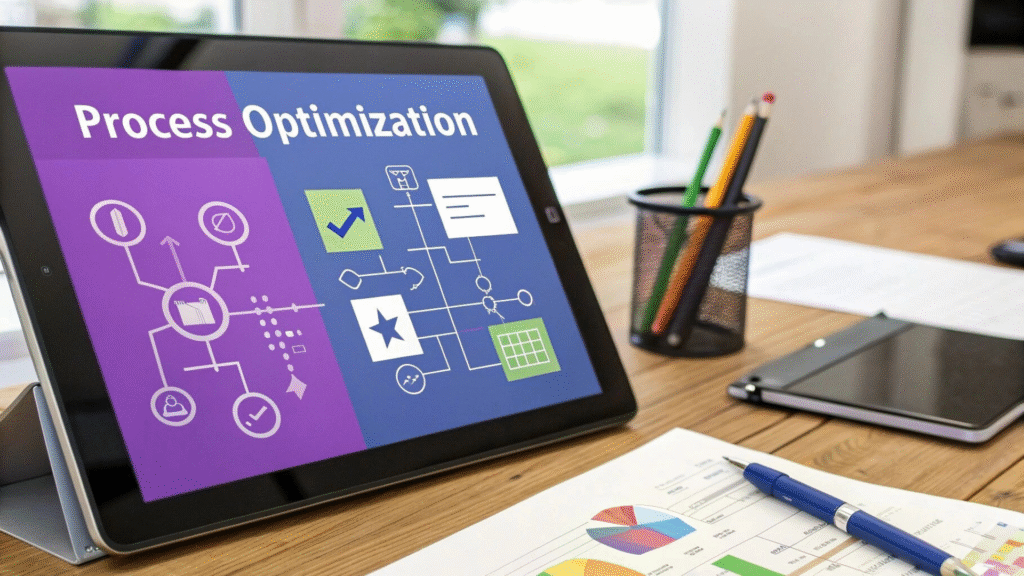
2. Process Optimization to Improve Operational Efficiency
Process optimization focuses on improving workflows and eliminating inefficiencies within an organization. Many businesses struggle with outdated processes that slow down operations and increase costs. Therefore, by analyzing these workflows, organizations can identify areas for improvement and implement more efficient systems.
One common approach to process optimization is automation. Automated systems can handle repetitive tasks such as data entry, scheduling, and inventory management. This reduces the workload on employees and minimizes the risk of errors.
Another important aspect of process optimization is standardization. Establishing consistent procedures ensures that tasks are completed efficiently and accurately. Standardized processes also make it easier to train new employees and maintain quality control.
Process improvement also involves evaluating resource allocation. Businesses must ensure that their resources are used effectively to achieve maximum productivity. This includes optimizing workforce management, equipment usage, and supply chain operations.
By improving operational efficiency through process refinement, businesses can reduce costs, increase productivity, and enhance overall performance.

3. Marketing Optimization for Better Customer Engagement
Marketing optimization is essential for businesses that want to maximize the impact of their promotional efforts. With the growing number of digital channels available, organizations must ensure that their marketing strategies are both effective and efficient.
Marketing improvement begins with audience targeting. Businesses must identify their ideal customers and tailor their messages to meet their needs. By focusing on relevant audiences, companies can improve engagement and increase conversion rates.
Another key element of marketing optimization is content performance analysis. Businesses should evaluate how their content performs across different platforms and adjust their strategies accordingly. High-performing content can be replicated and expanded to reach a wider audience.
A/B testing is also an important tool in marketing enhancement. By testing different versions of advertisements, emails, or landing pages, businesses can determine which approach delivers the best results. This experimentation helps refine marketing strategies over time.
Marketing optimization also involves tracking return on investment. Businesses must measure the effectiveness of their campaigns to ensure that resources are used efficiently. By analyzing results, organizations can focus on strategies that generate the highest value.
Through effective marketing optimization, businesses can enhance customer engagement and drive stronger growth.

4. Customer Experience Optimization for Long-Term Loyalty
Customer experience improvement focuses on improving every interaction between a business and its customers. In today’s competitive market, providing a positive customer experience is essential for building loyalty and maintaining a strong reputation.
Businesses can optimize customer experience by analyzing feedback and identifying areas where improvements are needed. For example, reducing response times, simplifying processes, and improving communication can significantly enhance customer satisfaction.
Personalization is another important aspect of customer experience optimization. Businesses can use customer data to provide tailored recommendations and customized services. This approach makes customers feel valued and strengthens their connection with the brand.
Technology also plays a key role in customer experience enhancement. Tools such as chatbots, customer relationship management systems, and automated support platforms enable businesses to provide faster and more efficient service.
Furthermore, by focusing on customer experience optimization, businesses can build lasting relationships and encourage repeat business.

5. Continuous Optimization for Sustainable Growth
Optimization is not a one-time effort; it is an ongoing process that requires continuous evaluation and improvement. Businesses that adopt a mindset of continuous improvement are better equipped to adapt to changes and maintain high performance levels.
Continuous optimization involves regularly reviewing processes, strategies, and performance metrics. Businesses must identify new opportunities for improvement and implement changes that enhance efficiency and effectiveness.
Another important aspect of continuous optimization is innovation. Organizations should encourage creativity and experimentation to discover new solutions and approaches. This innovative mindset supports long-term growth and competitiveness.
Training and development also contribute to continuous optimization. Employees must stay updated with new technologies and best practices to perform their roles effectively. Investing in workforce development ensures that organizations remain capable of achieving their goals.
Furthermore, by embracing continuous enhancement, businesses can maintain momentum and achieve sustainable growth over time.
Conclusion
Optimization is a powerful strategy that enables businesses to improve efficiency, enhance performance, and achieve sustainable growth in 2026. Organizations that prioritize optimization can streamline their operations, make informed decisions, and deliver better experiences to their customers.
From data-driven insights and process improvements to marketing strategies and customer experience enhancements, optimization plays a critical role in every aspect of business operations. When these elements work together, businesses create a strong foundation for success.
The rapidly evolving business environment, therefore, requires organizations to remain adaptable and proactive. Continuous optimization ensures that businesses can respond to changes effectively and seize new opportunities for growth.
Ultimately, optimization is not just about improving processes—it is about creating value. Businesses that embrace optimization as a core strategy can achieve long-term success and maintain a competitive advantage in the modern marketplace.
About Numrex
Numrex is dedicated to helping businesses succeed in the modern digital landscape by providing innovative insights, strategic knowledge, and practical solutions. With a focus on business growth, digital transformation, and performance optimization, Numrex delivers valuable resources that empower organizations to achieve their goals.
Through research-driven content and expert guidance, Numrex helps businesses understand emerging trends and implement effective strategies that enhance efficiency and competitiveness. From marketing optimization to advanced business technologies, Numrex offers insights that support informed decision-making.
Numrex believes that continuous improvement and innovation are essential for long-term success. Furthermore, by sharing actionable strategies and forward-thinking ideas, Numrex enables businesses to adapt to changing market conditions and unlock new opportunities.
As organizations continue to navigate the challenges of a dynamic global economy, Numrex remains committed to providing knowledge and solutions that drive growth, efficiency, and sustainable success.